





Bigyan Prasai,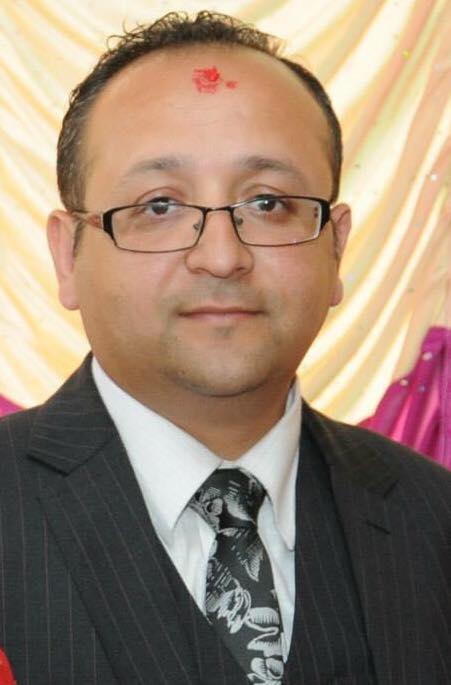
FCCA,
London
NC Mahasamiti Member
The draft constitution is now on the consultation process. This process of people consultation on the preparation of the new constitution is very democratic and participative in principle. In the modern political system, we appreciate the principle of participative democracy as a reinforcing factor to the representative democracy system. But the incorporation of the people’s suggestion in the constitution making process remains doubtful. There are valid reasons that this participation process is only a pretend and not genuine participation. Had this consultation process had valid implications, then the general framework, the basis of including the suggestion and measurement of public opinions should have been pronounced ex-ante.
There are different ways of getting suggestion and measuring public opinion if this process has genuine intentions:
1) A Focus Group: a moderate discussion among the small group on the particular controversial topic of the constitution like secularism, federalism, etc. to explore the thinking and emotions lying behind people’s attitude.
2) Opinion polls and Sample Survey: Governments or academic researchers should have commissioned these surveys.
3) Citizen Jury: Intense discussion, which involves exposing a small sample of electoral to a range of viewpoints on selected topic.
4) Electronic and written suggestions from individual people and organization: To code the suggestion, to identify the logic and quantify the suggestion in a different dimension. First of all I would like to suggest that this process of public opinion should be a genuine democratic exercise and all the suggestion received should to be accounted for and publicly available without any window dressing. Although the draft constitution incorporated and outlined many aspects correctly. With no discrimination of any race, creed, sector, sex, region and religion, however, it remains fairly incomplete and irrational in different aspects that I am going to outline below:
The preamble of this draft constitution looks somewhat like a political party manifesto. The preamble should not be prejudicial to the history of the nation and must be free from all the prejudices irrespective of political ideology. The constitution should not reflect the discrimination on the basis of ideology. The preamble should be free from all the ideological jargons and must be brief reflecting the nation identity. Non-Residential Nepalese Citizenship: (Part 2: Clause 19) The term to relinquish the Nepalese Citizenship of Nepalese origin after adopting foreign citizenship should not be written down in the constitution. Instead of relinquishing, it must be suspending the political rights of the people who adopt the citizenship of another country. So this will leave ordinary Nepalese people with all the expectation they want. However, if the people of Nepalese origin leaves the foreign citizenship and come back to Nepal and continuously stays in Nepal for Three (3) years, all his/her rights as a Nepalese citizen should resume. In the modern era of globalisation, in an era where we are drafting a fully liberal and inclusive democratic constitution, the rights to participate in all social and economic aspects should not be restrained for the people of Nepalese Origin living overseas,
however suspending political rights seem fair and logical. In the Citizen Act, which can be promulgated later, a clause to include a levy or fee or a different form of tax can be taken from the Nepalese Citizen residing overseas as a contribution towards national development. Referendum: (Part 34: Clause 270) The referendum is the most important mechanism of direct democracy. In the draft constitution, Part 34 Clause 270 clearly states that Federal Parliament can go for a referendum with the 2/3 Majority in the parliament. This type of referendum usually called by Government or parliaments is term as Representative Referendum. However, I would suggest adding one more clause as Referendum Initiatives and Agenda Initiatives, which are initiated by the people, and I would like to call this term as Participatory Referendum. Participatory Referendum allows a certain number of citizens to initiate a popular vote on a given proposal. This referendum initiative is legally possible in 37 countries in the world, mostly in Europe or Latin America. In Britain, a petition obtaining at least 100,000 signatures must now be considered by the House of Commons for debate, provided at least one member speaks in support of the debate. The advantage of this technique is that it allows minorities to place their concerns on the table.
This type of mechanism is introduced to the constitutions of several European countries Government Formation (Part 7, Clause 79, and Sub: Clause: 6 & 7) Part 7, clause 79, subclause 6 & 7 states the process of installing a government in where no party possesses a majority seat. It describe that to take office, a new government must obtain majority support in parliament within 30 days, failure to do so will dissolve the parliament. This provision must be abolished to keep a stable government to achieve prosperity. The system of Proportionate Representative and without the threshold will elect a hung parliament with no party with a simple majority. To avoid the complication of forming a government and dissolving a parliament in such situation, the clause 6 & 7 has to be substituted with, ‘ Procedure for installing a government in parliamentary systems where no party possesses a majority of seats. The new government will take office unless voted down by the majority in parliament.’ In Political term, this is known as negative investiture. Election on Proportionate Representative (Part 8, clause 88 Sub Clause 2) The principal of Proportionate representative in itself a good practice if the genuine representations are made as outlined by the constitution. But the recent practices showed that this system of the election had abused the principle.
The leaders of political parties were representing their wives (in woman quota), their group’s loyalist (in other reserved seats). The genuine spirit of this system has been malpractice by the political parties. So to reduce this malpractice I would like to add two additional clauses as below; • The PR systems should add an explicit threshold representation. The threshold of 5% should be kept at the minimum. In Denmark, the threshold is 2% and a maximum of 10% in Turkey. This threshold will reduce the chance of hung parliament. ‘The threshold is powerful mechanism for reducing fragmentation in the assembly.’(Kostadinova, 2002) • The PR closed list systems as practiced before where electors vote only for the party. This practice produced many flaws in systems, so I would like to suggest the system practiced in Western Europe, which gives voters some choice between candidates. This option is known as Preferential Proportionate Representative, which requires voters to select one or more candidates from the party list. Religion (Hindu Nation with right protecting the minorities): Preamble We live in an era of democracy. We are on the verge of drafting the most democratic, inclusive, participative constitution. We are drafting representative democratic constitution embedded in the values of democracy.
We practice the Majority rule in a democracy, so the rule is universal and only on critical national issues we practice supermajority rules such as 2/3 or 75% in the system. It is with this inherent principal of democracy that where more than 80% of people are Hindu; the nation should be clearly stated as ‘The Hindu Nation’ in the preamble to the Nation Constitution. No people representative can override this basic human right of the state Nepal, a Hindu nation. The simple rule is that in democracy’s Majority Governs protecting the right of Minority. What I am here advocating to state simply the fact that the Nepal is a Hindu Nation, nothing prejudicial, nothing offensive. But protecting the inherent right of other Minority religions. In the international practice, there are 26 declared Christian nations, 26 Islamic, 5 Buddhist, and 1 Jewish. Even within 8 SAARC countries 4 are Islamic and 2 Buddhist. (Source:
http://en.wikipedia.org/wiki/State_religion). It is a normal international practice that where the majority of the people practice one religion, the religion can be declared as a national religion. Judicial Activism (Part 11) Judicial Intervention in Public Policy has grown throughout the liberal democracies. Judges have become more willing to enter the political arenas that would have once been left to elected politicians and national parliament. (Harrop, 2013, ninth edition). The recent Supreme Court verdict on the constitutional making process in Nepal also justifies the above statement. The Supreme Court Judge was clearly seen to enter the political arena. So it is important specify the area and the model of the judicial decision-making make on the Supreme Court and the constitutional court. The unanimous or majority should make verdicts impacting the political decision, and it should be signed by all the judges who agree the decision but not by a single bench. In regards to the constitutional court, its area should be clearly defined in the constitution.
Supreme Court and the Constitution Court should be concerned to sustain federal democracy and to defend the autonomy of the country’s parliament not intervening it. Conclusion Finally, I would like to conclude that the Constitution should be adhering to the basics of human and state rights inclusive to all. Inclusive does also extend to people of Nepalese origin residing abroad. The Preamble should refrain from political slogans, ideology, and prejudices. It should be a declaration of principle and a definition of state purpose. The constitution should avoid gray area open to broader interpretation. It will clearly state the state purpose with clearly identifying the demarcation of Supreme Court and Constitutional Courts.